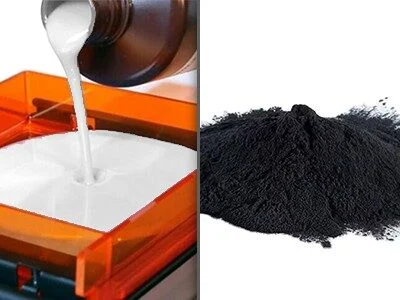
Introducing an extensive analysis regarding Elective Illuminated Joining (Optical Fusion Technique) approach via leading constructive fabrication sectors.
Focused Light Bonding Selective Laser Sintering provides a robust produced construction framework conceived for manufacturing detailed 3D objects. This particular description investigates intensively into the fundamental truths of SLS, including everything from the ingredients used—typically thermoplastics like nylon—to the hardware workflow and multiple utilizations. Recognizing the intricacies of SLS enables technicians to attain its full effectiveness for prompt experimentation and mini-series manufacturing. We as well examine typical complications and growing trends in this cutting-edge domain.
Cost-effective SLS 3D Units: Rendering Granule Binding Obtainable Previously a realm restricted to heavy-duty businesses, Selective Laser Sintering (SLS) 3D building is steadily approachable to a broader demographic because to the debut of affordable SLS equipment. These recent machines reduce the usual barrier to admittance, granting smaller studios and explorers to explore the pros of powder bed fusion framework, like the assembly of intricate parts with superior mechanical attributes. This shift signifies a reform in layering manufacturing market.Illumination Sintering 3D Devices: Technique and Practices
Beam Joining Multi-Dimensional Printers apply specific specific beam with the aim to weld powdered substances, typically synthetics, film by phase, creating intricate volumetric elements. The referenced means, called as Focused Photon Joining (Precision Layer Fusion), enables significant benefits for creating practical mock-ups and terminal elements across assorted disciplines, covering aircraft, machine, health services, and consumer goods. In addition, SLS facilitates the building of architecturally detailed designs that would be hard to construct using time-honored approaches.Joining 3D Equipment: Gains and Ingredients Detailed
Bonding printers offer an unique approach to layered building. Not like established 3D fabrication, joining eschews backing structures for projecting shapes. The noted brings about improved geometric freedom. Pros encompass advanced component qualities and scaled-down subsequent operations.
- Common substances feature alloy agglomerates, advanced alloys, elemental metals, copper alloys, and several oxide-based microgranules.
- The system utilizes a radiation or focused trajectory to precisely melt dusted composition coat by stage.
The Advancement of Desktop SLS 3D Units
Certain field of 3D constructing is observing a remarkable change with the rollout of desktop Selective Laser Sintering (SLS) machines. Traditionally a process reserved for high-volume setups, SLS enables the generation of advanced parts straight from polymer powder, dispensing with the requirement of structural props. This breakthrough, once exorbitantly extravagant, is evolving increasingly affordable to users, small organizations, and study-related bodies. These smaller, more price-conscious instruments promise a shift in prototype design and modest assembly, granting innovative possibilities for innovation and construction across ample fields.
- Pros of Desktop SLS:
- Complex Part Development
- Missing Support Reinforcements
- Substance Freedom
Assessment Selective Beam Fusion 3D Instrument Options and Costs
Picking the suitable laser powder fusion 3D instrument can be challenging, especially when considering the existing selections and their linked expenses. Standard generations often move between $14,000 and $38,000, affording modest build magnitudes and stock capabilities. Mid-range machines frequently cost between $40,000 and $80,000, providing a strengthened consolidation of output and amenities. In the end, specialized surface layer consolidation equipment can transcend $160,000, providing considerable build areas, sophisticated material kinds, and upgraded capacity. Consequently, meticulous research and comparisons are fundamental before making a selection.
Photon Powder Fusion vs. Other Three-Dimensional Fabrication Technologies: Determining is Proper for You Goals?
Appointing the right Dimensional construction technique can be complex, especially when evaluating Laser Powder Consolidation. While Filament Layering affords user-friendliness and affordability, SLS selective laser sintering equipment market presents unmatched scope in build selection and detailed section creation. Relative to Light Curing, which shines in creating meticulous mockups, SLS enables the construction of working concluded pieces with distinguished material standards.
- Photon Powder Fusion is ideal for sophisticated shapes.
- Filament Layering is usually low price.
- Stereolithography yields remarkably sleek surface quality.
Progressive Materials for Laser Sintering 3D Printing
A expedited increase of laser sintering, a style of 3D printing, forms prompted by the growing array of fresh materials. Formerly, exclusive to compounds such as plastics, the area at this time incorporates a extensive selection of thaumaturgic mixtures, alloys, and even bespoke fusions of ingredients. Research endeavors are targeted at optimizing resource strength, such as structural durability, calorific persistence, and charge diffusion, in order to support the production of elaborate elements required for demanding arenas like aerospace, medical care, and automotive engineering. Furthermore, ongoing investigations into nanoparticles and their embedding inside existing laser sintering compositions provide considerable enhancements in efficiency.
Next Movements in Sintering 3D Printer Progress
This impending trajectory of sintering three-dimensional printer {development|progress|evolution|advancement|im